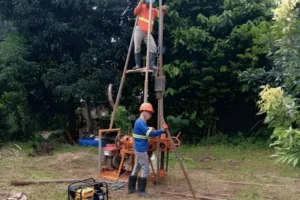
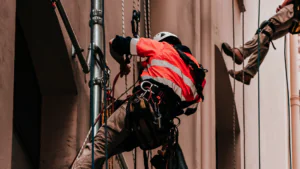
Working at height places construction crews, maintenance teams, tower technicians, and industrial workers near serious fall hazards. A single missed step, damaged ladder rung, wet surface, or unstable grip can lead to severe injury. Companies must provide dependable equipment that protects workers while supporting safe, efficient movement across vertical access routes.
A Vertical Lifeline in Myanmar gives workers continuous fall protection while climbing ladders, towers, tanks, silos, shafts, and similar structures. The system moves with the worker during ascent or descent. Should a sudden fall occur, a compatible fall arrester locks onto the lifeline and helps stop uncontrolled downward movement.
GROXX GEARS supplies heavy-duty industrial safety solutions built for demanding work environments. Its fall protection range supports construction, building maintenance, manufacturing, telecommunications, utilities, and other sectors where safe access remains essential. Through strong materials, careful engineering, and strict product quality practices, GROXX GEARS helps businesses create safer vertical work routes.
What Is a Vertical Lifeline System?
A vertical lifeline system is a fall arrest setup fixed along a vertical climbing path. Common routes include permanent ladders, communication towers, industrial tanks, high-rise service areas, and access shafts. Workers connect their full-body harness to a guided fall arrester attached to a cable or rope lifeline.
The guided device travels along the lifeline as the worker climbs. Normal movement remains smooth when each component works correctly. A sudden rapid descent causes the device to lock, helping limit fall distance and reduce the chance of striking a lower surface.
A Vertical Lifeline in Myanmar may be permanent or temporary. Permanent systems usually use galvanized or stainless-steel cable secured to a fixed structure. Temporary systems often use approved synthetic rope that can be installed, moved, and stored according to project needs.
Unlike basic lanyard setups that require workers to disconnect and reconnect repeatedly, a vertical system can provide continuous attachment throughout a climbing route. This supports safer movement while reducing interruptions during repeated access tasks.
Why Vertical Fall Protection Matters Across Myanmar
Myanmar continues to support construction, industrial development, telecommunications, utilities, warehousing, and property maintenance activities. Many tasks across these sectors require workers to climb elevated structures. Such work may happen during equipment installation, repair, cleaning, inspection, painting, or structural assessment.
Weather also affects height safety. Rain, humidity, strong sun, dust, and coastal air can change surface conditions and equipment performance. Wet ladder rungs may become slippery, while long-term moisture exposure may contribute to corrosion. A properly selected Vertical Lifeline in Myanmar helps address these risks by giving workers a secure connection throughout vertical travel.
Fall protection also supports better site discipline. Workers who receive proper equipment and training can follow a clear climbing procedure. Supervisors can confirm that approved systems are being used, inspections are recorded, and damaged gear is removed from service.
No equipment can remove every hazard. Yet a correctly designed vertical lifeline can reduce exposure and create an important layer of protection for employees working above ground level.
Main Parts of a Vertical Lifeline in Myanmar
Every system depends on compatible components working together. Mixing unsuitable products may affect performance, so each part should match the manufacturer’s approved system configuration.
Vertical Cable or Rope
The cable or rope forms the main travel path. Steel cable often suits fixed ladders, towers, tanks, and other permanent structures. Galvanized cable offers good strength and general corrosion resistance, while stainless-steel cable may suit areas with frequent moisture, chemicals, or coastal exposure.
Synthetic rope may suit temporary access routes. Rope systems are often lighter and easier to transport between work areas. Proper storage remains necessary because cuts, abrasion, chemicals, dirt, heat, and moisture may weaken rope fibers.
Guided Fall Arrester
The guided fall arrester moves along the cable or rope during normal climbing. It must face the correct direction and connect to the approved harness attachment point. During a sudden fall, the device locks onto the lifeline.
Workers should never attach a fall arrester to a lifeline that has not been approved for that exact device. Cable diameter, rope diameter, material, and system design all affect compatibility.
Anchorage Points
Anchorage points connect the lifeline to the supporting structure. Upper anchors carry critical loads during fall arrest. Lower anchors or tensioning assemblies help maintain correct cable alignment.
Each anchor must be attached to a structure capable of supporting required forces. Structural checks should happen before installation. Weak steel, cracked concrete, corroded brackets, or damaged ladder frames may not provide adequate support.
Full-Body Harness
A full-body harness distributes fall arrest forces across stronger parts of the body. Correct sizing and adjustment affect safety and comfort. Loose straps may increase movement during a fall, while overly tight straps may restrict mobility.
Workers must connect the lifeline system to the approved dorsal or sternal attachment point based on system requirements. Body belts should not replace a full-body harness for fall arrest work.
Energy-Absorbing Connector
Some systems include an energy-absorbing element between the harness and guided device. This component helps reduce the force transferred to the worker and anchorage during fall arrest.
The connector should remain short enough to limit fall distance and prevent unsafe reach. Knots, extensions, and unapproved connectors should never be added.
Cable Guides and Tensioners
Long vertical routes may require intermediate guides. These guides help keep the cable aligned with the ladder or supporting structure. They also limit excessive cable movement caused by wind or worker activity.
A tensioner keeps the cable within the correct tension range. Too much slack may affect device travel and fall distance. Excessive tension may place unnecessary load on system parts.
Common Applications for Vertical Lifeline Systems
A Vertical Lifeline in Myanmar can support many industries and structures. The final system choice depends on height, access frequency, worker count, structure type, and environmental conditions.
Construction teams may use vertical lifelines on cranes, scaffolding access ladders, temporary towers, and structural frames. Telecommunications crews may rely on fixed systems while climbing antenna towers and communication masts.
Factories and industrial plants often have fixed ladders leading to roofs, platforms, tanks, chimneys, or machinery areas. Utility workers may need safe access to power structures, water facilities, and maintenance platforms.
Building maintenance teams may use a Vertical Lifeline in Myanmar to reach roof service zones, facade access points, and building maintenance equipment. Mining, transport, port, and infrastructure projects may also require vertical fall protection for inspection and repair work.
Each location should receive a site-specific assessment. A solution suitable for an indoor warehouse ladder may not suit an exposed coastal tower.
Vertical Cable Lifeline Versus Vertical Rope Lifeline
Cable and rope systems serve similar safety purposes, yet each offers different advantages.
A cable-based Vertical Lifeline in Myanmar usually suits permanent installations. Steel cable handles frequent use, demanding environments, and long service periods when inspected and maintained correctly. Stainless-steel options may provide added protection against corrosion.
Rope systems often suit temporary work. Crews can transport them between locations, attach them to approved anchors, and remove them after a task. Their lighter weight may help teams working across several sites.
Cable systems may require brackets, guides, tensioners, and professional installation. Rope systems may require fewer fixed parts, though setup must still follow approved instructions. Both types require compatible fall arresters and full-body harnesses.
Selection should account for weather, chemicals, dust, sharp edges, heat, climbing height, access frequency, and rescue needs. Price alone should not decide which system to purchase.
Permanent and Temporary Vertical Lifeline Systems
Permanent systems suit structures accessed regularly. Examples include communication towers, factory ladders, water tanks, high-rise service routes, and industrial platforms. Once installed, the lifeline remains ready for trained workers after required pre-use checks.
A permanent Vertical Lifeline in Myanmar may reduce setup time for recurring maintenance. It also provides a consistent access procedure for employees and contractors. Scheduled professional inspection remains necessary to verify anchors, cable condition, guides, fasteners, tension, and fall arrester compatibility.
Temporary systems suit short projects or changing access points. Construction crews, inspection teams, and mobile technicians may install rope lifelines before work and remove them afterward.
Temporary does not mean less important. Each setup still needs an approved anchorage point, correct rope placement, edge protection, clearance assessment, and rescue plan. The system should be inspected before every use and stored away from harmful conditions.
Benefits of a Vertical Lifeline in Myanmar
Continuous attachment ranks among the main benefits. Workers can climb without repeatedly moving twin lanyards from one rung or anchor to another. This may support smoother movement and reduce periods where incorrect clipping could occur.
The locking device also responds quickly during sudden downward movement. When fitted and used correctly, it helps stop a fall before the worker travels a long distance.
A vertical lifeline may also support productivity. Workers can focus on steady climbing rather than making frequent connection changes. This matters for technicians who access towers or service areas many times during a work period.
Permanent systems help standardize safety procedures. Companies can assign approved equipment, document inspections, train workers, and set clear access rules.
A high-quality Vertical Lifeline in Myanmar also provides long-term value when properly maintained. Durable materials, replaceable components, and clear inspection requirements can support reliable service across recurring operations.
Choosing the Right Vertical Lifeline in Myanmar
System selection should begin with a thorough review of the work area.
Structure type matters. A fixed steel ladder requires a different mounting method from a concrete shaft, communication tower, or temporary scaffold. The condition of the supporting structure must also be checked.
Climbing height affects cable length, guide spacing, fall clearance, and rescue planning. Longer routes may need more intermediate guides and access platforms.
Worker capacity also requires attention. Some systems allow only one user, while others may support several workers under stated conditions. The number of users should never exceed the approved rating.
Environmental exposure plays a major role. Outdoor systems may face rain, humidity, ultraviolet exposure, dust, chemicals, or salt-laden air. Material selection should match those conditions.
Compatibility remains critical. Harnesses, fall arresters, connectors, cables, ropes, anchors, and energy absorbers should form one approved setup. Unapproved combinations may fail to perform as expected.
Comfort should also be considered. Workers may spend long periods wearing harnesses and climbing. A well-fitted harness and smooth-traveling fall arrester can support better movement and worker acceptance.
GROXX GEARS Engineering and Product Quality
GROXX GEARS focuses on industrial equipment designed for high-demand work settings. Its products support tasks where equipment strength, accurate manufacturing, and dependable performance matter.
High-strength alloys and advanced heat-treatment methods help create durable components capable of handling heavy loads and repeated use. Precise production processes support consistent dimensions, proper fit, and reliable mechanical action.
For a Vertical Lifeline in Myanmar, product quality affects more than convenience. Guided devices must move correctly, connectors must close securely, and anchor components must hold their position. Even a small defect can affect system performance.
GROXX GEARS also supplies related industrial products such as rigging gear, fasteners, horizontal lifelines, fall arrest equipment, and building maintenance systems. This broad product range helps companies source connected safety and maintenance solutions from one provider.
Proper Installation of a Vertical Lifeline System
Installation should follow a documented system plan. The process begins with a site survey covering structure condition, ladder layout, climbing distance, anchor positions, user capacity, fall clearance, and rescue access.
Upper and lower connection points must be placed according to manufacturer requirements. Intermediate guides should maintain cable alignment without blocking worker movement.
Cable tension must be checked after installation. The guided fall arrester should travel smoothly along the complete route. Entry and exit points should allow safe connection before exposure to a fall hazard.
Fasteners, brackets, and anchor components should receive final checks. Installation details should be documented, including product model, cable length, anchor type, inspection date, and approved user capacity.
Unauthorized changes should be avoided. Drilling new holes, changing cable length, adding homemade brackets, or replacing parts with generic alternatives may affect system safety.
Inspection Checklist for a Vertical Lifeline in Myanmar
Workers should inspect the system before each use. A quick but careful check can identify visible damage before climbing begins.
Cable systems should be checked for corrosion, broken wires, kinks, flattening, loose ends, and poor tension. Rope systems should be checked for cuts, glazing, fraying, chemical damage, discoloration, and damaged stitching.
Guided fall arresters should move correctly and lock when tested according to approved procedures. Connectors should close and lock without sticking. Harness webbing should remain free from cuts, burns, chemical marks, loose stitching, and damaged buckles.
Anchors, brackets, guides, and fasteners should remain secure. Labels and identification marks should stay readable.
Scheduled inspection by a competent person should also occur at the required interval. Records should show inspection dates, findings, repairs, replacements, and equipment status.
Any Vertical Lifeline in Myanmar that has arrested a fall should be removed from service until professionally assessed. Some components may require full replacement even when no visible damage appears.
Maintenance Practices for Longer Equipment Life
Proper care supports dependable system performance. Dirt, concrete dust, grease, salt, and chemicals should be removed through approved cleaning methods.
Metal parts should be dried after cleaning. Harsh chemicals should not be applied unless approved by the manufacturer. Lubricants should only be added where instructions permit them.
Temporary rope systems should be stored away from sunlight, heat, moisture, sharp tools, and chemical products. Wet rope should dry naturally before storage.
Permanent systems should receive regular checks after severe weather, structural work, impact, or long periods without use. Corrosion-prone locations may require more frequent review.
Maintenance records help companies track component age and recurring problems. Early replacement of worn parts may prevent a larger system failure.
Worker Training and Rescue Planning
A Vertical Lifeline in Myanmar only works correctly when users understand how to inspect, connect, climb, and disconnect safely.
Training should cover harness fitting, attachment points, fall arrester direction, connector locking, climbing technique, equipment limitations, and defect reporting. Workers should also know when to stop work due to weather, damaged structures, or missing components.
Rescue planning remains essential. A worker suspended after a fall may need prompt assistance. Sites should prepare rescue equipment, trained personnel, communication methods, and clear response roles.
The rescue plan should match the structure. A tower rescue differs from a ladder rescue inside a tank or shaft. Practice drills help teams confirm that equipment, access, and procedures work as expected.
Relying only on public emergency services may cause delays. Site teams should be prepared to begin an approved rescue response while external help is being contacted.
Common Vertical Lifeline Mistakes to Avoid
One common mistake involves using the wrong fall arrester for the cable or rope. Even devices that look similar may have different approved diameters or locking designs.
Another mistake involves connecting to the wrong harness point. Workers should follow system instructions rather than choosing the easiest ring to reach.
Poor inspection also creates risk. Corrosion, frayed rope, damaged stitching, loose anchors, and unreadable labels should never be ignored.
Some teams exceed the approved user capacity. Every Vertical Lifeline in Myanmar has stated limits that must be respected.
Lack of rescue planning remains another serious issue. Stopping a fall does not complete the emergency response. The suspended worker still needs safe retrieval.
Unapproved repairs should also be avoided. Damaged safety equipment should be assessed and repaired only through accepted procedures.
Why Choose GROXX GEARS for Vertical Lifeline in Myanmar?
GROXX GEARS provides industrial solutions made for demanding construction, maintenance, and engineering work. Its focus on heavy-duty materials and careful manufacturing supports reliable equipment performance.
Companies can access vertical and horizontal lifeline options, full-body harnesses, connectors, anchor products, rigging equipment, fasteners, and building maintenance solutions. This allows buyers to plan a broader safety setup rather than purchasing isolated components without compatibility checks.
GROXX GEARS can help match a Vertical Lifeline in Myanmar with structure type, climbing route, environmental exposure, worker count, and project duration. Such planning supports better product selection and safer long-term use.
The right system should protect workers without creating unnecessary movement restrictions. Through quality products and practical system planning, GROXX GEARS supports companies seeking dependable fall protection for vertical access work.
Frequently Asked Questions About Vertical Lifeline in Myanmar
What is the main purpose of a vertical lifeline?
A vertical lifeline provides fall arrest protection while a worker climbs upward or downward. The connected fall arrester follows normal movement and locks during a sudden fall.
Can a vertical lifeline be added to an existing ladder?
Yes, many existing ladders can receive a vertical lifeline. A professional assessment should confirm ladder condition, structure strength, anchor positions, cable clearance, and system compatibility before installation.
Is steel cable better than synthetic rope?
Steel cable often suits permanent installations and frequent access. Synthetic rope may suit temporary work and mobile crews. The better option depends on location, exposure, project length, and work frequency.
How often should a Vertical Lifeline in Myanmar be inspected?
Users should complete a pre-use check before every climb. A competent person should also perform scheduled inspections according to manufacturer instructions, site policy, and applicable safety requirements.
Can several workers use the same vertical lifeline?
Only when the system has been approved for multiple users. Worker count must stay within the stated capacity of the lifeline, anchors, and supporting structure.
What harness should be used with a vertical lifeline?
Workers should wear a compatible full-body harness with the correct attachment point. Harness selection should match the fall arrester and complete system requirements.
Can a vertical lifeline be used after stopping a fall?
The system should be removed from service and assessed by a qualified person. Components exposed to fall arrest forces may require replacement even without visible damage.
Does a vertical lifeline remove the need for rescue equipment?
No. Fall arrest stops the worker’s descent, but rescue equipment and trained responders remain necessary to retrieve a suspended person safely.
Where can businesses source a Vertical Lifeline in Myanmar?
GROXX GEARS supplies heavy-duty fall protection products and industrial safety solutions for construction, maintenance, manufacturing, telecommunications, utilities, and related sectors.