
Construction quality depends heavily on the materials selected before any structure, road, pavement, or foundation takes shape. Laboratory Testing gives contractors, engineers, developers, and project owners measurable data about soil, aggregates, asphalt, steel products, and concrete hollow blocks. Rather than relying only on appearance or supplier claims, project teams receive documented results based on controlled procedures and recognized standards.
Inch-On Materials Testing Laboratory provides independent quality verification for construction and engineering projects. Established during November 2018, the laboratory holds accreditation from the Department of Public Works and Highways–Bureau of Research and Standards. Its services cover both controlled Laboratory Testing and on-site assessment for soil, concrete, and foundation piles. ASTM and AASHTO procedures guide each applicable test, helping clients review material quality with confidence.
Reliable Laboratory Testing supports safer construction decisions, clearer project documentation, and better control over materials before they become part of permanent work.
What Laboratory Testing Means for Construction Projects
Laboratory Testing refers to the technical assessment of construction materials under controlled conditions. Samples are prepared, measured, and examined through approved methods using suitable apparatus. Each procedure targets specific properties that help determine whether a material matches project specifications.
A soil sample may require classification, moisture checks, particle-size analysis, plasticity assessment, density evaluation, or compaction testing. Aggregate samples may require grading, abrasion, cleanliness, or absorption checks. Steel products may need strength and dimensional verification, while concrete hollow blocks may require compressive strength and water absorption assessment.
The main value of Laboratory Testing comes from objective data. Visual review alone cannot confirm bearing capacity, tensile strength, grading, moisture behavior, or compressive performance. Test results give engineers a factual basis for approval, rejection, adjustment, or further investigation.
Why Laboratory Testing Matters Before Construction Starts
Poor-quality materials can create problems that become costly after installation. Weak aggregates may reduce concrete performance. Unsuitable soil may contribute to settlement. Low-quality asphalt may wear too quickly. Steel products that fail required properties may compromise structural reliability. Concrete hollow blocks with poor strength may affect wall performance.
Laboratory Testing helps identify these concerns before materials become difficult or expensive to replace. Early verification can support supplier screening, material approval, mix preparation, site planning, and construction quality control.
Testing also supports communication among contractors, consultants, owners, and government representatives. A formal report gives every party the same technical reference. That clarity reduces disputes and supports faster review of material compliance.
For projects with strict technical requirements, Laboratory Testing becomes a necessary part of responsible construction management.
Coarse Aggregate Laboratory Testing
Coarse aggregates form a major part of concrete, road base layers, drainage works, and other structural applications. Their size, shape, hardness, grading, and cleanliness can affect strength, workability, durability, and long-term service.
Laboratory Testing for coarse aggregates may examine particle-size distribution, abrasion resistance, moisture condition, specific gravity, absorption, and material cleanliness. Results help determine whether the sample suits concrete production, pavement work, road construction, or another planned application.
Poor grading may create excessive voids or uneven concrete behavior. Weak particles may break under load. Excessive dust or unwanted material may affect bonding. Through Laboratory Testing, project teams can compare sample results against approved project criteria before delivery or placement.
Fine Aggregate Laboratory Testing
Fine aggregates, commonly used for concrete, mortar, plaster, and related cement-based work, require consistent quality. Particle distribution, moisture, cleanliness, and composition can affect workability, finish, bonding, and strength.
Laboratory Testing checks whether fine aggregate meets the required grading range and whether unwanted materials may affect performance. Excessive silt, clay, organic matter, or moisture variation may create inconsistent batches or require adjustments during production.
Accurate Laboratory Testing allows contractors and batching teams to make better decisions about proportioning and quality control. It also supports comparison between suppliers, helping project teams select materials that meet technical requirements.
Asphalt Laboratory Testing
Asphalt quality has a direct effect on road stability, surface performance, flexibility, and service life. Material composition must support expected traffic loads, climate conditions, and project specifications.
Laboratory Testing for asphalt may assess mix properties, consistency, stability, flow, density, or related factors required by the project. These results help engineers judge whether the asphalt mix can provide suitable performance after placement and compaction.
Road projects depend on accurate test data because pavement defects can lead to early repairs, traffic disruption, and added cost. Laboratory Testing supports better quality control before asphalt becomes part of a finished road surface.
Soil Laboratory Testing
Soil supports foundations, roads, embankments, retaining structures, and many other construction elements. Its behavior varies greatly depending on particle composition, moisture, density, and load-bearing properties.
Laboratory Testing for soil may cover classification, particle-size distribution, moisture content, plasticity, density, compaction, and bearing-related properties. These tests help identify whether the soil suits its planned purpose or requires treatment, replacement, or further engineering review.
Weak, highly compressible, poorly compacted, or moisture-sensitive soil may create settlement and stability concerns. Laboratory Testing provides data that can guide foundation design, earthwork planning, fill selection, and compaction control.
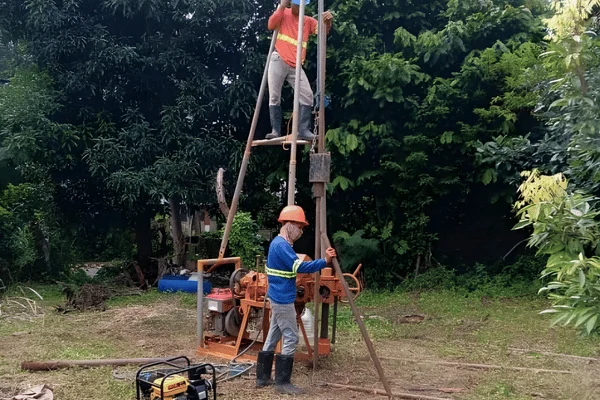
Inch-On also performs on-site soil assessment using specialized equipment. Combining controlled Laboratory Testing with field data gives engineers a broader view of actual site conditions.
Reinforced Steel Bar and Product Laboratory Testing
Reinforced steel bars help concrete resist tensile forces. Their strength, ductility, dimensions, weight, and physical properties must match project requirements.
Laboratory Testing can verify whether steel products meet specified criteria before they become part of columns, beams, slabs, walls, or foundations. Results may support material approval, supplier evaluation, and quality documentation.
Substandard steel may affect structural performance and create serious concerns once concrete has already been poured. Early Laboratory Testing gives project teams a chance to identify noncompliant products before installation.
Concrete Hollow Block Laboratory Testing
Concrete hollow blocks are widely used for walls, partitions, enclosures, and other building components. Their quality can vary based on materials, production methods, curing, dimensions, and workmanship.
Laboratory Testing may assess compressive strength, water absorption, density, dimensions, and other relevant properties. Results help determine whether blocks suit the planned application and meet project requirements.
Blocks with low strength or excessive absorption may create durability, cracking, or moisture concerns. Laboratory Testing supports better product selection and gives contractors documented evidence before large quantities are installed.
How Laboratory Testing and On-Site Testing Work Together
Controlled Laboratory Testing examines samples under repeatable conditions. On-site testing checks actual conditions at the project location. Both methods provide valuable information, but each answers different questions.
A laboratory can measure material properties with high control and precision. Field testing can assess actual soil, concrete, or pile conditions where the structure stands. When combined, these services give engineers a more complete technical picture.
Inch-On provides on-site assessment for soil, concrete, and foundation piles using specialized equipment. This capability supports projects that require more than sample-based review. Laboratory Testing confirms material properties, while field assessment helps verify actual site performance.
ASTM and AASHTO Standards for Laboratory Testing
Recognized standards help laboratories follow consistent procedures for sample preparation, measurement, calculation, and reporting. ASTM methods cover a broad range of construction materials and technical assessments. AASHTO procedures are commonly applied to roads, transport structures, aggregates, soil, asphalt, and related public works.
Following applicable ASTM and AASHTO methods helps produce results that engineers, consultants, contractors, and government agencies can review against known criteria. Standard procedures also improve repeatability and support fair comparison between samples.
Inch-On carries out Laboratory Testing based on applicable ASTM and AASHTO protocols. This commitment supports accurate data, consistent methods, and clear documentation for construction projects.
Why DPWH-BRS Accreditation Matters
Accreditation from the Department of Public Works and Highways–Bureau of Research and Standards reflects recognized technical capability for approved construction material tests. It also shows that a laboratory meets regulatory expectations for equipment, procedures, personnel, and quality controls within its accredited scope.
Choosing a DPWH-BRS accredited provider gives contractors and project owners greater confidence that Laboratory Testing follows recognized requirements. Accreditation also supports projects where formal testing documents form part of material approval, billing, inspection, or compliance records.
Inch-On’s DPWH-BRS accreditation strengthens its role as an independent testing partner for engineering and construction work.
The Laboratory Testing Process
A clear Laboratory Testing process starts with proper sample collection. Samples should represent the material batch, site area, or product group being assessed. Incorrect sampling may produce results that do not reflect actual conditions.
After collection, each sample receives proper identification and documentation. Laboratory personnel then prepare the material based on the required method. Preparation may include drying, crushing, sieving, trimming, measuring, or conditioning.
The selected test is then performed using suitable apparatus and the required procedure. Measurements are recorded, checked, and calculated. Laboratory staff review the data before preparing the final report.
A test report may include sample details, test method, measured values, calculated results, observations, and other information required for technical review. This document helps project teams decide whether the material meets approved criteria.
Who Needs Laboratory Testing Services
Laboratory Testing supports many groups across construction and engineering work. Contractors need test results for material approval and quality control. Civil engineers use data for design checks and technical decisions. Developers depend on reports for project documentation and risk management.
Government agencies may require testing for public infrastructure projects. Suppliers and manufacturers may request assessment to verify product quality. Consultants may need independent data during inspection or dispute review. Property owners may also request Laboratory Testing for renovation, repair, or structural assessment projects.
Any project that depends on soil, concrete components, aggregates, asphalt, steel, or masonry products can benefit from reliable testing.
When Laboratory Testing Should Be Conducted
Laboratory Testing should take place before materials become part of permanent construction whenever project specifications require verification. Testing may also be needed during supplier approval, sample evaluation, concrete production, earthwork, pavement work, or regular quality-control checks.
Additional testing may be appropriate when materials appear inconsistent, when a new supplier is selected, when site conditions change, or when an engineer requests confirmation. Defect investigations may also require Laboratory Testing to identify possible material-related causes.
Early testing gives project teams more options. Materials can be rejected, replaced, adjusted, or reviewed before they create larger construction problems.
How Laboratory Testing Helps Prevent Project Problems
Construction defects often trace back to material quality, poor site preparation, improper compaction, unsuitable mix proportions, or products that do not meet required properties. Laboratory Testing helps reduce these risks by identifying concerns at an earlier stage.
Test results may prevent weak concrete components, premature pavement damage, soil settlement, poor masonry performance, or the installation of noncompliant steel. Testing can also reduce delays linked to missing documentation or failed inspection.
No laboratory can guarantee that every project issue will disappear, but accurate Laboratory Testing gives project teams stronger evidence for planning, approval, and corrective action.
Choosing a Reliable Laboratory Testing Provider
A dependable provider should have suitable accreditation, trained personnel, proper apparatus, recognized procedures, and clear reporting practices. Clients should also confirm whether the laboratory can perform the exact tests required by project specifications.
Both laboratory and field capabilities may matter for complex work. A provider that offers controlled testing plus on-site assessment can support broader technical needs across soil, concrete, and foundation systems.
Clear communication also matters. Clients should receive guidance about sample quantity, preparation, labeling, delivery, expected procedures, and report requirements before testing starts.
Why Choose Inch-On Materials Testing Laboratory
Inch-On Materials Testing Laboratory offers independent testing support for construction and engineering projects. Since November 2018, the company has provided services for coarse aggregates, fine aggregates, asphalt, soil, reinforced steel bars and products, and concrete hollow blocks.
Its DPWH-BRS accreditation supports regulatory confidence, while ASTM and AASHTO procedures guide applicable tests. Inch-On also performs on-site testing for soil, concrete, and foundation piles using specialized equipment.
Clients choose Inch-On for precise Laboratory Testing, clear technical documentation, and support across both laboratory and field requirements. These services help contractors, engineers, developers, and project owners verify material quality before major decisions are made.
Laboratory Testing as Part of Strong Construction Quality Control
Quality construction begins with reliable materials and accurate information. Laboratory Testing gives project teams the technical evidence needed to confirm suitability, compare results, and address concerns before they affect permanent work.
From soil and aggregates to asphalt, steel, and concrete hollow blocks, each material requires proper assessment. Testing supports safety, durability, compliance, and long-term performance across construction projects.
Through accredited services, recognized procedures, specialized equipment, and independent reporting, Inch-On Materials Testing Laboratory helps clients make better material decisions. Proper Laboratory Testing is not merely a documentation requirement. It is a practical step toward safer structures, stronger foundations, and more dependable project outcomes.
Frequently Asked Questions About Laboratory Testing
What Construction Materials Can Inch-On Test?
Inch-On provides Laboratory Testing for coarse aggregates, fine aggregates, asphalt, soil, reinforced steel bars and products, and concrete hollow blocks. Available tests depend on the requested method, sample type, and accredited scope.
Why Is Laboratory Testing Needed Before Construction?
Laboratory Testing checks whether materials meet project requirements before installation. It can identify weak, unsuitable, or noncompliant materials early, helping reduce delays, repair costs, and quality concerns.
What Does DPWH-BRS Accreditation Mean?
DPWH-BRS accreditation means the laboratory has received recognition from the Department of Public Works and Highways–Bureau of Research and Standards for approved testing capabilities. The accredited scope may cover specific materials and procedures.
Which Standards Guide Inch-On’s Laboratory Testing?
Applicable tests follow ASTM and AASHTO procedures. The exact method depends on the material, project specification, and requested assessment.
Does Inch-On Provide On-Site Testing?
Yes. Inch-On performs on-site assessment for soil, concrete, and foundation piles using specialized equipment. These services can complement controlled Laboratory Testing.
How Long Does Laboratory Testing Take?
Turnaround time depends on the material, requested test, sample condition, preparation requirements, and testing method. Clients should ask the laboratory for a schedule before sample submission.
Who Can Request Laboratory Testing?
Contractors, engineers, consultants, developers, suppliers, manufacturers, government agencies, and property owners may request Laboratory Testing for construction or engineering needs.
What Information Appears on a Test Report?
A report may include sample identification, test method, measured values, calculated results, observations, and other technical details required for review.
Can Laboratory Testing Support Government Project Requirements?
Yes. Accredited testing and proper documentation may support material approval and quality-control requirements for government work, subject to project specifications and applicable rules.
How Should Samples Be Prepared for Submission?
Clients should contact Inch-On before delivery. Laboratory staff can provide guidance about sample quantity, packaging, labeling, condition, and required test method.