
Reliable construction outcomes depend heavily on accurate ground evaluation. Soil Testing provides critical information about soil strength, composition, and behavior under load, helping engineers design safe and durable structures from the foundation upward.
Soil Testing plays a central role in geotechnical engineering because every structure interacts directly with the ground beneath it. Without proper Soil Testing, construction projects face risks such as uneven settlement, cracking, and long-term instability.
Importance of Soil Testing for Construction Projects
Soil Testing serves as the first step in understanding site conditions before any structural design begins. Every soil type reacts differently when exposed to load, moisture, and environmental changes. Soil Testing identifies these characteristics early, allowing engineers to make informed decisions about foundation design.
Construction safety depends on accurate Soil Testing results because the soil acts as the natural support system for buildings, roads, bridges, and other infrastructure. Weak or unpredictable soil conditions can lead to structural movement over time. Soil Testing reduces these risks by identifying soil strength, density, and composition before construction work progresses.
Projects that skip or minimize Soil Testing often face costly repairs and safety concerns later. Soil Testing helps prevent these issues by providing reliable geotechnical data that supports long-term structural performance.
What Soil Testing Means in Engineering Practice
Soil Testing refers to a series of scientific procedures used to evaluate the physical and mechanical properties of soil. These procedures measure how soil responds to stress, water content changes, and compaction forces.
Engineering teams rely on Soil Testing to classify soil types and determine whether the ground can safely support planned structures. Soil Testing results guide decisions such as foundation depth, structural load limits, and ground improvement needs.
Soil Testing also helps identify unstable soil layers that may require reinforcement or replacement. By understanding soil behavior through Soil Testing, engineers can reduce uncertainty and improve construction accuracy.
ASTM Standards Used in Soil Testing
Standardized procedures ensure consistency and reliability in Soil Testing results. Many construction projects follow guidelines developed by ASTM International, a globally recognized organization for technical standards.
Common ASTM standards used in Soil Testing include:
ASTM D1586, which covers the Standard Penetration Test used to measure soil resistance and strength
ASTM D4318, which determines the plasticity characteristics of soil, including liquid and plastic limits
ASTM D422, which evaluates particle-size distribution to classify soil composition
These standards ensure Soil Testing results remain consistent across different laboratories and projects. Organizations such as ASTM International play a key role in maintaining quality and uniformity in Soil Testing methods used worldwide.
Field Soil Testing for Site Evaluation
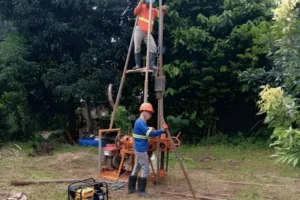
Field Soil Testing takes place directly at construction sites to assess real ground conditions. This stage of Soil Testing provides immediate insight into soil strength, layering, and variability across the project area.
Field Soil Testing helps engineers understand how soil behaves under natural conditions without laboratory alteration. Common field Soil Testing activities include penetration tests, compaction checks, and site sampling.
Results from field Soil Testing guide early design decisions and help determine whether further laboratory analysis is required. Field Soil Testing also supports foundation planning by identifying weak zones that may require soil improvement.
Organizations such as Inch-On Materials Testing Laboratory perform field Soil Testing using specialized equipment that ensures accurate ground evaluation for construction projects.
Laboratory Soil Testing for Detailed Analysis
Laboratory Soil Testing provides a controlled environment for deeper analysis of soil samples collected from the field. This stage of Soil Testing delivers precise data on soil composition, strength, and classification.
Laboratory Soil Testing includes procedures such as particle size analysis, moisture content measurement, and plasticity evaluation. These tests help engineers understand how soil will behave under structural loads.
Unlike field testing, laboratory Soil Testing allows technicians to isolate variables and obtain highly detailed results. This improves accuracy and supports better engineering decisions for foundation design.
Laboratory Soil Testing also plays a major role in confirming whether construction materials meet project requirements and safety standards. The combination of field and laboratory Soil Testing provides a complete picture of site conditions.
Soil Properties Evaluated Through Soil Testing
Soil Testing focuses on several key properties that directly affect construction safety and performance.
Bearing capacity is one of the most important factors measured through Soil Testing. It determines how much load the soil can support without failure.
Soil compaction is another critical aspect evaluated through Soil Testing. Proper compaction ensures stability and reduces future settlement risks.
Plasticity refers to how soil changes shape under pressure and moisture variation. Soil Testing identifies plasticity levels that may affect structural stability.
Moisture content also plays a major role in Soil Testing results. High moisture levels can weaken soil strength and increase movement over time.
Each of these factors measured through Soil Testing contributes to safer foundation design and improved structural reliability.
Importance of Accredited Soil Testing Laboratories
Accredited laboratories provide trusted Soil Testing results that meet engineering and regulatory requirements. Accreditation ensures that Soil Testing procedures follow approved standards and maintain consistent accuracy.
Projects requiring government approval or large-scale construction depend heavily on certified Soil Testing services. Accreditation from agencies such as DPWH-Bureau of Research and Standards ensures compliance with national construction requirements.
Soil Testing performed by accredited laboratories also reduces uncertainty in engineering reports. This helps project owners and contractors make confident decisions based on verified data.
How Soil Testing Supports Foundation Design
Foundation design relies heavily on Soil Testing results because the foundation transfers structural loads into the ground. Without accurate Soil Testing, foundation systems may be undersized or incorrectly designed.
Soil Testing helps engineers select appropriate foundation types such as shallow foundations, deep foundations, or pile systems. Each option depends on soil strength and stability determined through Soil Testing.
Soil Testing also identifies areas where soil improvement methods may be necessary. These methods may include compaction, stabilization, or replacement of weak soil layers.
By providing detailed ground information, Soil Testing reduces the risk of structural failure and supports long-term building performance.
Benefits of Professional Soil Testing Services
Professional Soil Testing provides several important advantages for construction projects.
It improves safety by identifying soil weaknesses before construction begins. Soil Testing reduces the risk of unexpected ground movement that could affect structures.
It supports cost efficiency by preventing design errors and unnecessary repairs. Accurate Soil Testing helps avoid redesigns and structural corrections during construction.
Soil Testing also improves project planning by giving engineers reliable data for scheduling and material selection. This leads to smoother construction progress.
Another benefit of Soil Testing is compliance with engineering standards and building codes. Projects that follow proper Soil Testing procedures are more likely to pass inspections and approvals.
Role of Soil Testing in Long-Term Structural Performance
Soil Testing not only supports construction planning but also contributes to long-term structural stability. Buildings interact with soil throughout their lifespan, and changes in soil conditions can affect performance over time.
Soil Testing helps predict how soil may respond to environmental factors such as moisture changes, seasonal shifts, and load variations. This allows engineers to design structures that remain stable under changing conditions.
Consistent Soil Testing practices also support maintenance planning by identifying potential ground-related issues early. This helps reduce long-term repair costs and extends structural lifespan.
Soil Testing as the Foundation of Safe Construction
Soil Testing remains a critical step in every construction project because it defines the strength and reliability of the ground beneath a structure. Accurate Soil Testing supports safe design decisions, reduces construction risks, and improves long-term performance.
Through field and laboratory Soil Testing, engineers gain a complete understanding of soil behavior. Accredited institutions such as Inch-On Materials Testing Laboratory provide reliable Soil Testing services that support compliance, safety, and engineering accuracy.
Soil Testing continues to serve as the starting point for every stable and successful construction project.
Frequently Asked Questions (FAQ)
What is Soil Testing in construction?
Soil Testing is the process of evaluating soil properties such as strength, density, moisture content, and composition to determine suitability for construction.
Why is Soil Testing important before building?
Soil Testing helps identify ground conditions that affect foundation design, safety, and long-term structural performance.
What standards are used in Soil Testing?
Common standards include ASTM D1586, ASTM D4318, and ASTM D422, developed by ASTM International.
What is the difference between field and laboratory Soil Testing?
Field Soil Testing evaluates soil directly at the site, while laboratory Soil Testing analyzes collected samples under controlled conditions for more detailed results.
How does Soil Testing help foundation design?
Soil Testing provides data on soil strength and behavior, helping engineers choose suitable foundation types and avoid structural risks.
Who performs Soil Testing?
Soil Testing is performed by accredited geotechnical laboratories such as Inch-On Materials Testing Laboratory using standardized procedures and calibrated equipment.